
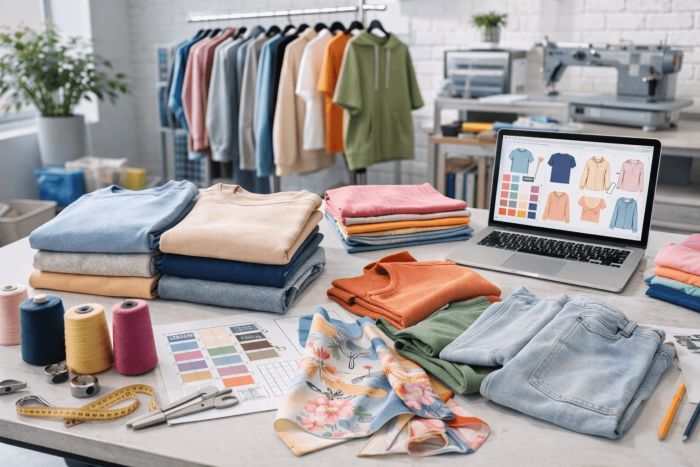
Starting a clothing brand is an exciting opportunity, but one of the biggest challenges new entrepreneurs face is finding a low MOQ clothing manufacturer. Many garment factories require large minimum order quantities, which can make it difficult for startups to test designs or launch their first collection.
For new brands with limited budgets, committing to hundreds or thousands of garments per design can create significant financial risk. This is why many startups specifically look for a low MOQ clothing manufacturer that supports smaller production runs.
Fortunately, some manufacturers specialize in working with emerging brands and offer flexible production options. By partnering with the right low MOQ clothing manufacturer, startups can develop samples, produce small batches, and gradually scale their business as demand grows.
In this guide, we explain how low MOQ clothing manufacturing works, where to find these suppliers, and how to evaluate them before placing your first order.
What Is a Low MOQ Clothing Manufacturer?
A low MOQ clothing manufacturer is a factory that allows clothing brands to produce garments in relatively small quantities compared with traditional large-scale manufacturers.
In the apparel industry, MOQ stands for Minimum Order Quantity, which represents the smallest number of units a factory is willing to produce for one order.
Typical MOQ levels in clothing manufacturing include:
large factories: 500–1000 pieces per style
mid-sized factories: 200–500 pieces per style
low MOQ clothing manufacturer: 50–150 pieces per style
Lower order quantities allow startups to experiment with multiple designs, colors, and size ranges without committing to large inventories.
For brands launching their first collection, working with a low MOQ clothing manufacturer makes it much easier to test the market before expanding production.
Why Startup Brands Prefer Low MOQ Manufacturers
Many new clothing brands intentionally choose a low MOQ clothing manufacturer because smaller production runs offer several strategic advantages.
Lower Financial Risk
Producing large quantities of garments before validating market demand can be risky. By working with a low MOQ clothing manufacturer, startups can test products with smaller investments.
This approach allows brands to analyze customer feedback before scaling production.
Faster Product Launch
Smaller production volumes often mean shorter production schedules. A low MOQ clothing manufacturer can usually complete small batch orders faster than factories focused exclusively on large-scale manufacturing.
For startups trying to launch their first collection quickly, this flexibility can be extremely valuable.
More Design Flexibility
Early-stage brands often experiment with different styles, fabrics, and colors. A low MOQ clothing manufacturer allows brands to test multiple designs and identify which products perform best in the market.
This flexibility is particularly useful for streetwear brands and small fashion labels that frequently release new collections.
Where to Find Low MOQ Clothing Manufacturers
Finding a reliable low MOQ clothing manufacturer requires careful research and supplier verification.
Online B2B Platforms
Many startup brands begin searching for manufacturers on sourcing platforms such as:
Alibaba
Global Sources
Made-in-China
These platforms allow brands to compare suppliers, request quotations, and review product catalogs. However, it is important to verify whether the supplier is an actual factory or a trading company.
Working With Private Label Manufacturers
Some suppliers specialize in supporting startup brands by offering flexible production quantities. These companies often operate as a private label clothing manufacturer, allowing brands to customize existing garment styles with their own labels and branding.
This approach can reduce development time and simplify the manufacturing process.
Sourcing From China
Many startups eventually choose to work with a clothing manufacturer in China. China has one of the most complete textile supply chains in the world, which allows factories to source fabrics, trims, and accessories quickly.
Because of this manufacturing ecosystem, Chinese suppliers are often able to offer competitive pricing while maintaining strong production capabilities.
Understanding Cut and Sew Manufacturing
When choosing a low MOQ clothing manufacturer, it is important to understand the difference between customizing blank garments and full garment production.
A cut-and-sew manufacturer creates garments directly from raw fabric rather than modifying pre-made blanks.
Brands that want unique designs often work with a cut and sewing clothing manufacturer because they provide services such as:
pattern development
fabric sourcing
garment construction
custom sizing and fit adjustments
This process allows brands to develop completely original products instead of simply decorating blank apparel.
How to Evaluate a Low MOQ Clothing Manufacturer
Selecting the right low MOQ clothing manufacturer requires careful evaluation of potential suppliers.
Check Product Specialization
Many factories specialize in certain product categories such as streetwear, knitwear, or sportswear. Choosing a low MOQ clothing manufacturer with experience in your product category usually leads to better results.
Request Samples
Sampling is a critical step when working with a low MOQ clothing manufacturer. Samples allow brands to evaluate:
fabric quality
garment construction
stitching accuracy
finishing details
Reviewing samples helps identify potential issues before bulk production begins.
Evaluate Communication and Reliability
Clear communication is essential in clothing manufacturing. A reliable low MOQ clothing manufacturer should provide prompt responses, transparent pricing, and clear production timelines.
Strong communication reduces the risk of misunderstandings during production.
Typical Production Timeline
When working with a low MOQ clothing manufacturer, production usually involves several stages.
Typical timeline:
design confirmation – 3 to 7 days
sample development – 7 to 14 days
sample revision – 5 to 10 days
bulk production – 20 to 35 days
Planning each stage carefully helps ensure a smoother production process.
Common Mistakes Startup Brands Should Avoid
When searching for a low MOQ clothing manufacturer, many startups make avoidable mistakes that can delay production.
Choosing Only Based on Price
The lowest price does not always indicate the best supplier. Extremely cheap quotes may indicate lower-quality materials or poor manufacturing standards.
Skipping the Sampling Process
Some brands attempt to skip the sampling stage to save time or money. However, this can lead to serious problems during bulk production.
Providing Incomplete Specifications
Manufacturers require detailed information about fabrics, measurements, trims, and branding. Without clear specifications, even a reliable low MOQ clothing manufacturer may struggle to produce garments correctly.
Conclusion
Finding a reliable low MOQ clothing manufacturer is one of the most important steps when launching a clothing brand. Manufacturers that support smaller order quantities allow startups to test designs, reduce financial risk, and gradually scale production.
By researching suppliers carefully, requesting samples, and maintaining clear communication, startup brands can build long-term partnerships with the right low MOQ clothing manufacturer and create a strong foundation for future growth.
Frequently Asked Questions
What is considered a low MOQ in clothing manufacturing?
In most cases, a low MOQ clothing manufacturer offers minimum orders between 50 and 150 pieces per style, although this can vary depending on fabric requirements and customization.
Can startups work with overseas clothing manufacturers?
Yes. Many startups work with overseas suppliers, particularly in Asia, because they offer competitive pricing and flexible production options.
What is the difference between private label and cut-and-sew manufacturing?
Private label manufacturing typically involves customizing existing garments with labels or prints, while cut-and-sew manufacturing creates garments from raw fabric according to the brand’s original design.
How long does clothing production usually take?
For most small batch orders, production with a low MOQ clothing manufacturer takes approximately 30 to 45 days, including sampling and bulk production.