Custom Marathon Shirts: A Complete Guide for Race Organizers
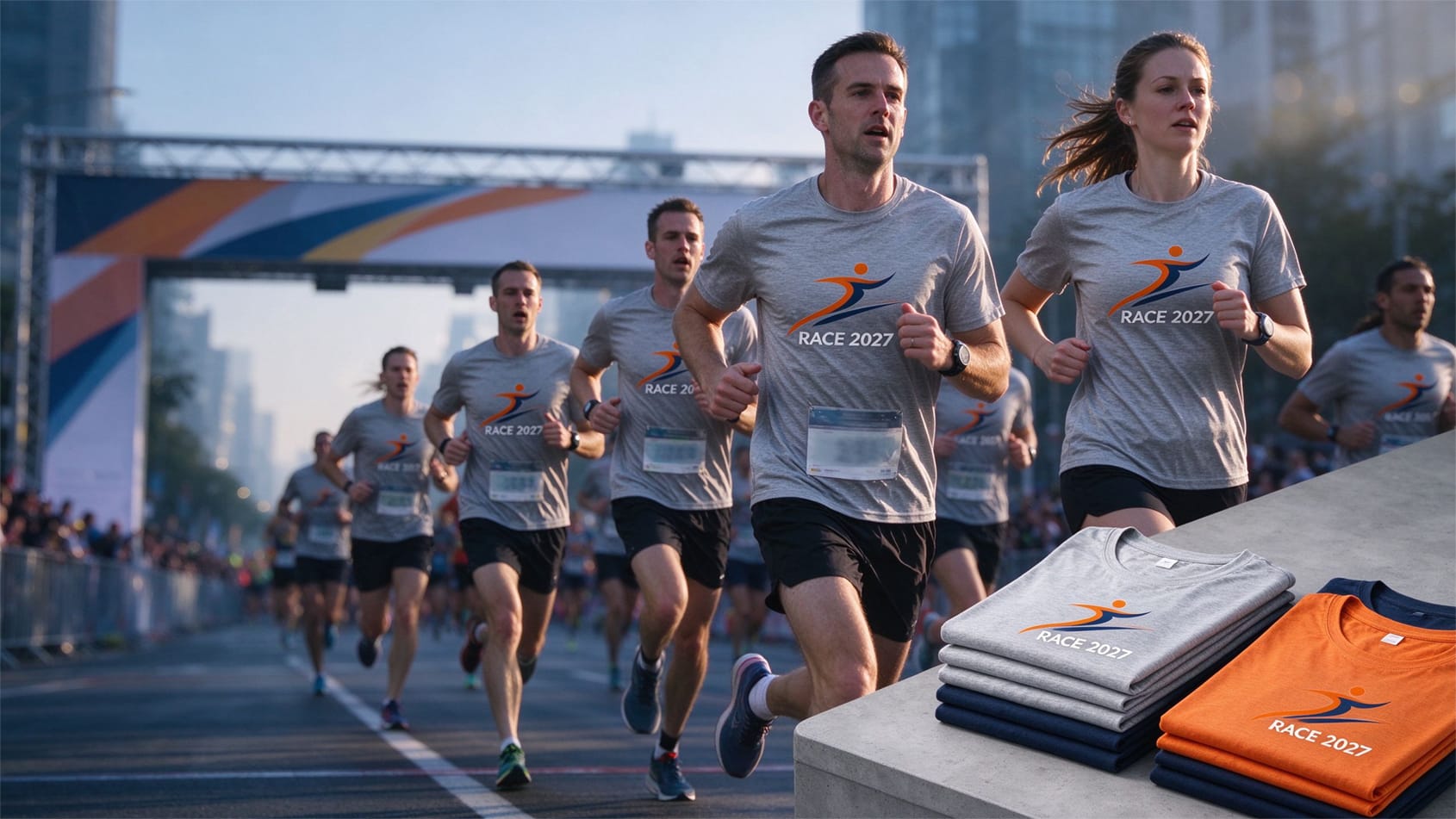
For marathon and running event organizers, custom shirts are more than just participant merchandise. They help create a consistent event identity, provide space for sponsor branding, and give runners a practical souvenir of the race.
When ordering hundreds or thousands of shirts, however, details such as fabric, printing, sizing, and production time need to be planned before production begins.
Choosing the Right Fabric for Marathon Shirts
The right fabric depends on how the shirts will be used and the type of running event.
Polyester performance fabrics are a common choice for marathon and running shirts because they are lightweight and suitable for sportswear. They are also well suited to sublimation printing when the design contains detailed graphics or full-shirt patterns.
Cotton can be a good option for charity runs, community events, and shirts intended primarily as souvenirs. It provides a familiar, casual feel but may not offer the same performance characteristics as sports fabrics.
Cotton-polyester blends can provide a balance between comfort, appearance, and cost.
For a long-distance running event, it is usually better to select the fabric based on the actual race conditions, climate, and intended use rather than choosing solely by price.
What Should Be Printed on a Marathon Shirt?
A marathon shirt can include several elements without making the design unnecessarily complicated.
Common artwork includes:
- Race or event logo
- Event name and year
- Sponsor logos
- Runner or team numbers
- Charity or organization logo
- Race location
- Commemorative graphics
Sponsor logos often require careful planning because several sponsors may need to appear on the same shirt. Their size and placement should be agreed upon before production.
If individual runner numbers are required, tell the manufacturer at the beginning of the project. Variable numbering may require a different printing process from a standard bulk design.
Choosing a Printing Method
The best printing method depends on the fabric, artwork, quantity, and number of colors.
Screen printing is suitable for many large-volume orders with relatively simple artwork.
Heat transfer can be useful for smaller graphics or variable information such as individual numbers.
Sublimation printing is particularly suitable for polyester running shirts with colorful or detailed designs. It allows organizers to create large printed areas, gradients, patterns, and other complex graphics.
A manufacturer can recommend the most appropriate method after reviewing the fabric and artwork.
Planning Quantities and Sizes
The number of registered runners should not always be the same as the number of shirts ordered.
In addition to participants, organizers may need shirts for:
- Volunteers
- Race staff
- Sponsors
- VIPs
- Replacement stock
The size breakdown should also be finalized before bulk production. If registration records contain participants’ preferred sizes, this information can provide a useful basis for planning the order.
For larger events, confirming the final quantity and size breakdown early helps avoid last-minute production changes.
How Early Should You Order?
Custom marathon shirts require more time than simply purchasing ready-made T-shirts.
The production schedule may include artwork confirmation, sample development, fabric preparation, printing, sewing, quality inspection, packing, and shipping.
For this reason, organizers should plan backward from the race date and allow additional time for sampling and transportation.
When requesting a quotation, always tell the manufacturer the required delivery date so they can confirm whether the production schedule is realistic.
What Should You Send to a Manufacturer?
A manufacturer can provide a more accurate quotation when the initial requirements are clear.
Ideally, provide:
- Estimated quantity
- Size breakdown
- Shirt design or reference
- Fabric preference, if available
- Printing requirements
- Sponsor logos
- Individual numbering requirements
- Packaging requirements
- Delivery destination
- Required delivery date
You do not need to have every technical detail finalized before contacting a manufacturer. A good clothing manufacturer can help confirm the appropriate fabric, printing method, and production specifications based on your event requirements.
Frequently Asked Questions
What is the MOQ for custom marathon shirts?
MOQ varies by manufacturer, fabric, printing method, and design. Bulk production is generally more suitable when the event requires hundreds or more shirts.
Can I add multiple sponsor logos?
Yes. Multiple sponsor logos can be included in the artwork. Their positions and sizes should be confirmed before production.
Can each shirt have a different runner number?
It may be possible depending on the printing method and production setup. Discuss variable numbering with the manufacturer before placing the order.
Can marathon shirts be individually packed?
Yes. Individual packaging, size labels, stickers, and other packing requirements can be arranged for bulk event orders.
Can I order different sizes in one production run?
Yes. A bulk order can normally include multiple sizes. The final quantity by size should be confirmed before production starts.
Conclusion
A successful custom marathon shirt order depends on more than the artwork. Fabric, printing, sponsor logos, quantities, sizes, and delivery timing all need to work together.
For race organizers ordering in bulk, providing the manufacturer with clear event requirements from the beginning makes it easier to develop the right product and keep production on schedule.
If you are planning a marathon, charity run, school race, or other running event, send your design, estimated quantity, size requirements, and deadline to a manufacturer to discuss the most suitable production solution.